Ebb Hotel Dunedin
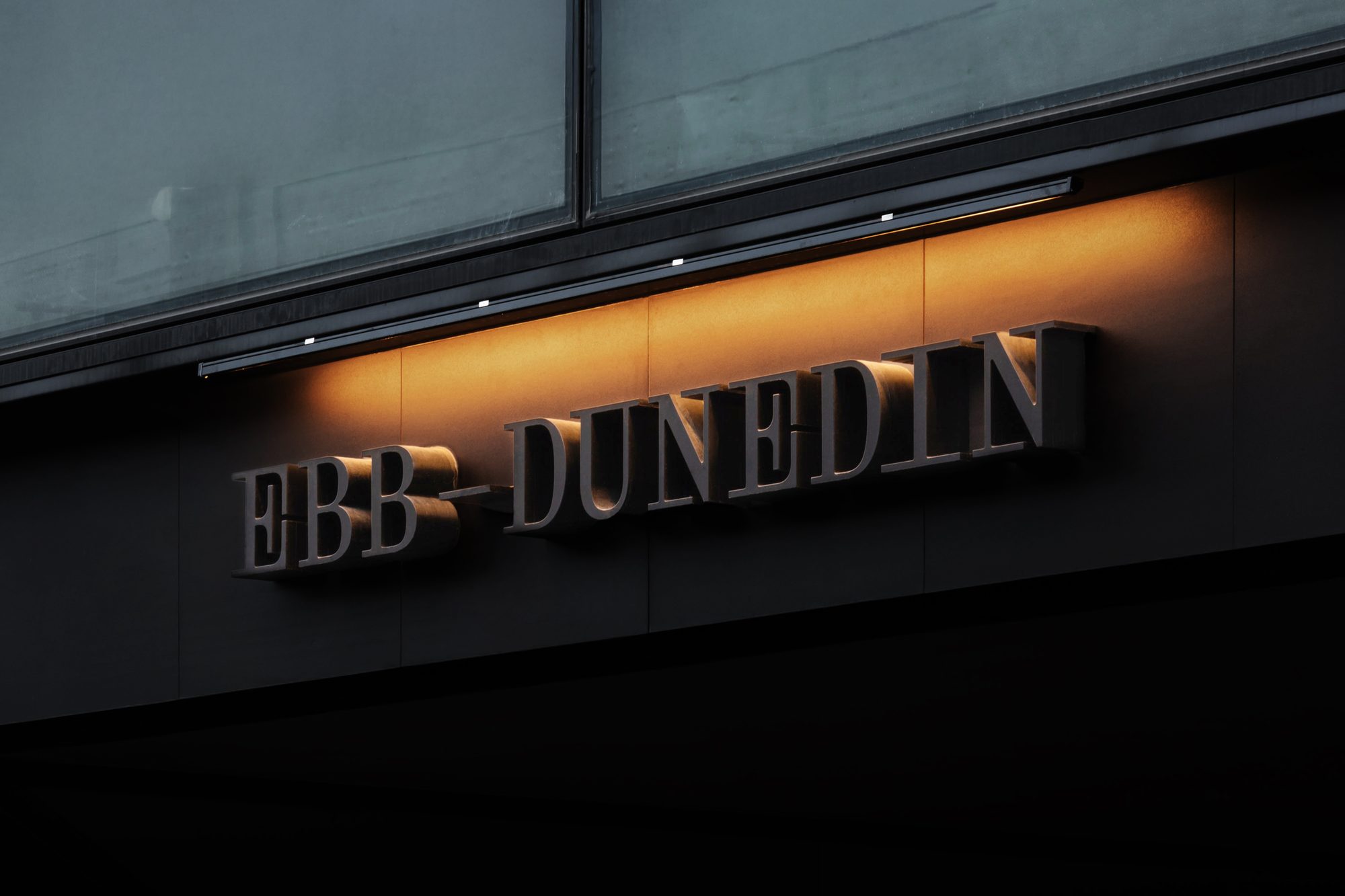
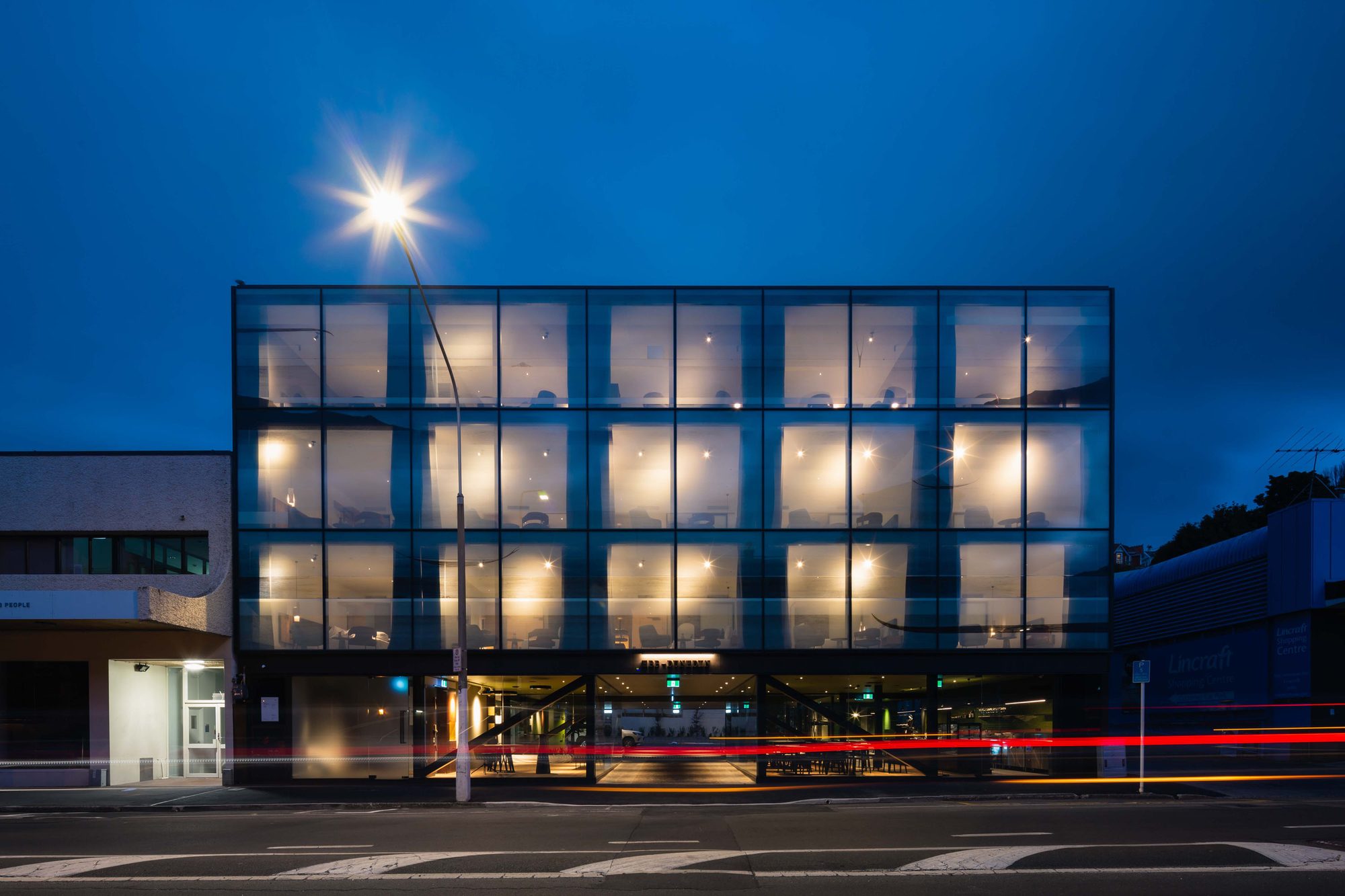
Ebb Dunedin is an award-winning boutique hotel where guests enjoy a subtle luxury. The understated elegance carries across to a wayfinding solution that effortlessly informs guests, so they can find their rooms and the amenities without ever needing to ask.
A heritage problem in need of modern simplification
The building itself is small and narrow, with a floor plan that separates circulation across split level corridors. With so many navigation options presented to guests within a short field of view, the wayfinding had to be simple and immediate. However, it could never shout. It had to be quiet enough to sit within the interior palette and help to visually unclutter the interior, reinforcing the sense of refinement needed for a luxury experience. Guests should be able to instinctively find their way from the main entrance to their room, then to the on-site amenities, without ever having to ask for directions.
An all-inclusive solution
Much like Ebb Dunedin caters to every whim of their guests and takes responsibility for all aspects of their stay, we took responsibility for all aspects of wayfinding. This began with an initial walk-through, progressed to strategy, then to the fabrication and the installation of signs.
Becoming a guest
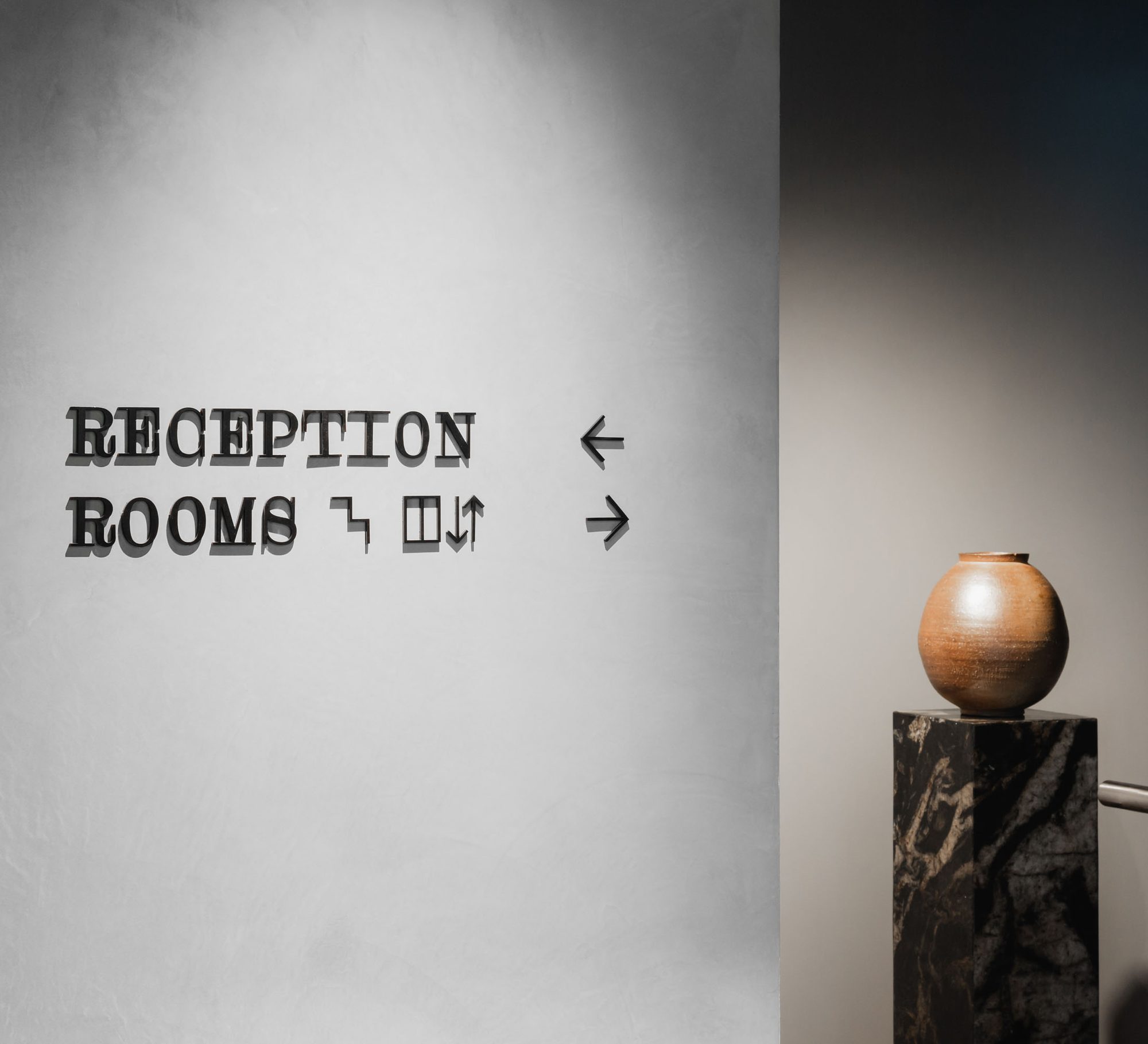
We began by becoming a guest. Tasked with finding different rooms, we walked the space and mapped every decision point. It’s a process that’s repeated in order to test logic and remove assumptions. No two journeys are the same unless the decisions made are guided by wayfinding that leaves no room for doubt or misinterpretation.
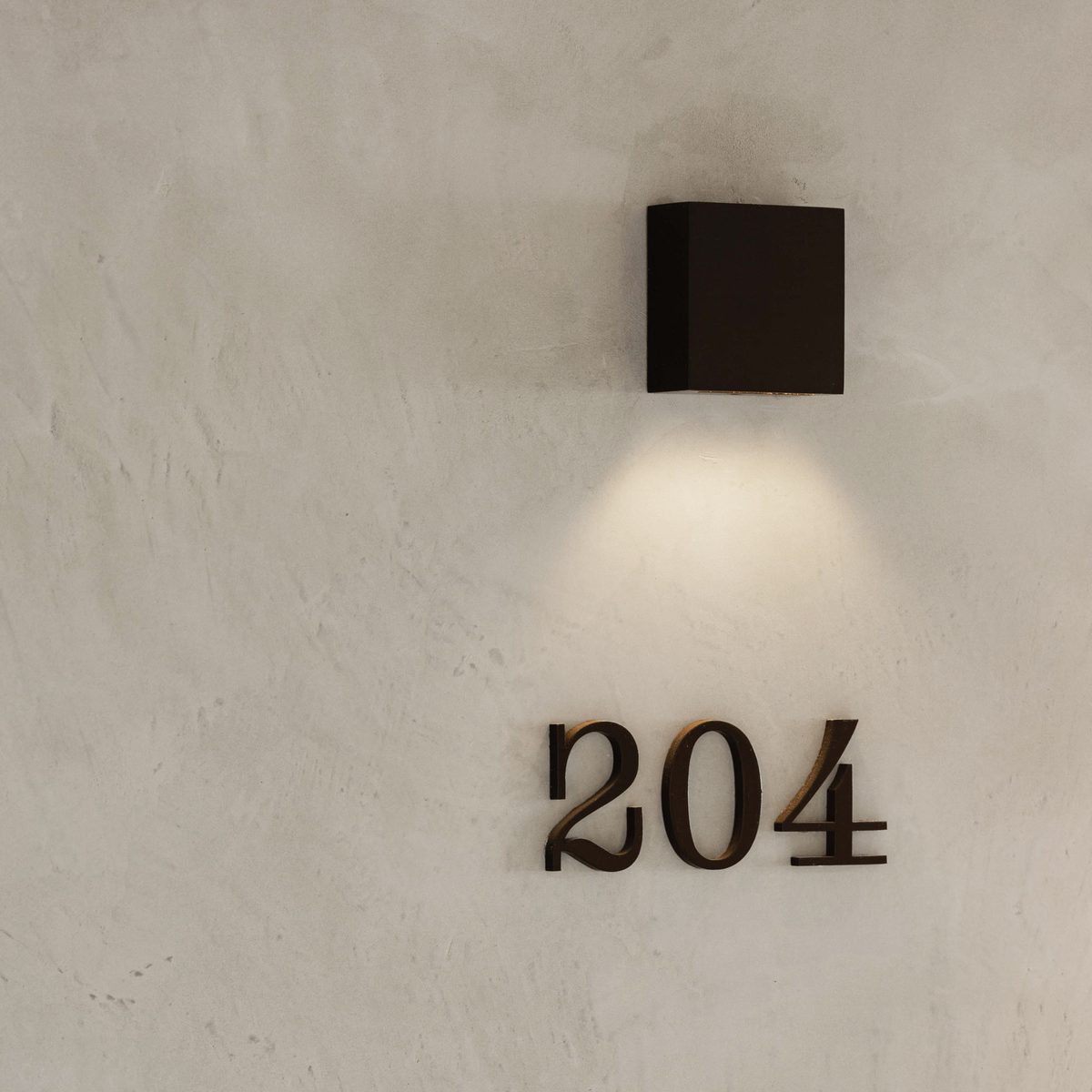
Once we were confident our solution map covered every eventuality, we moved from function to form and designed a family of signs covering arrival, level, direction, and room. They were intentionally compact and subservient to the interior architecture, used to compliment the aesthetics while quietly informing guests.
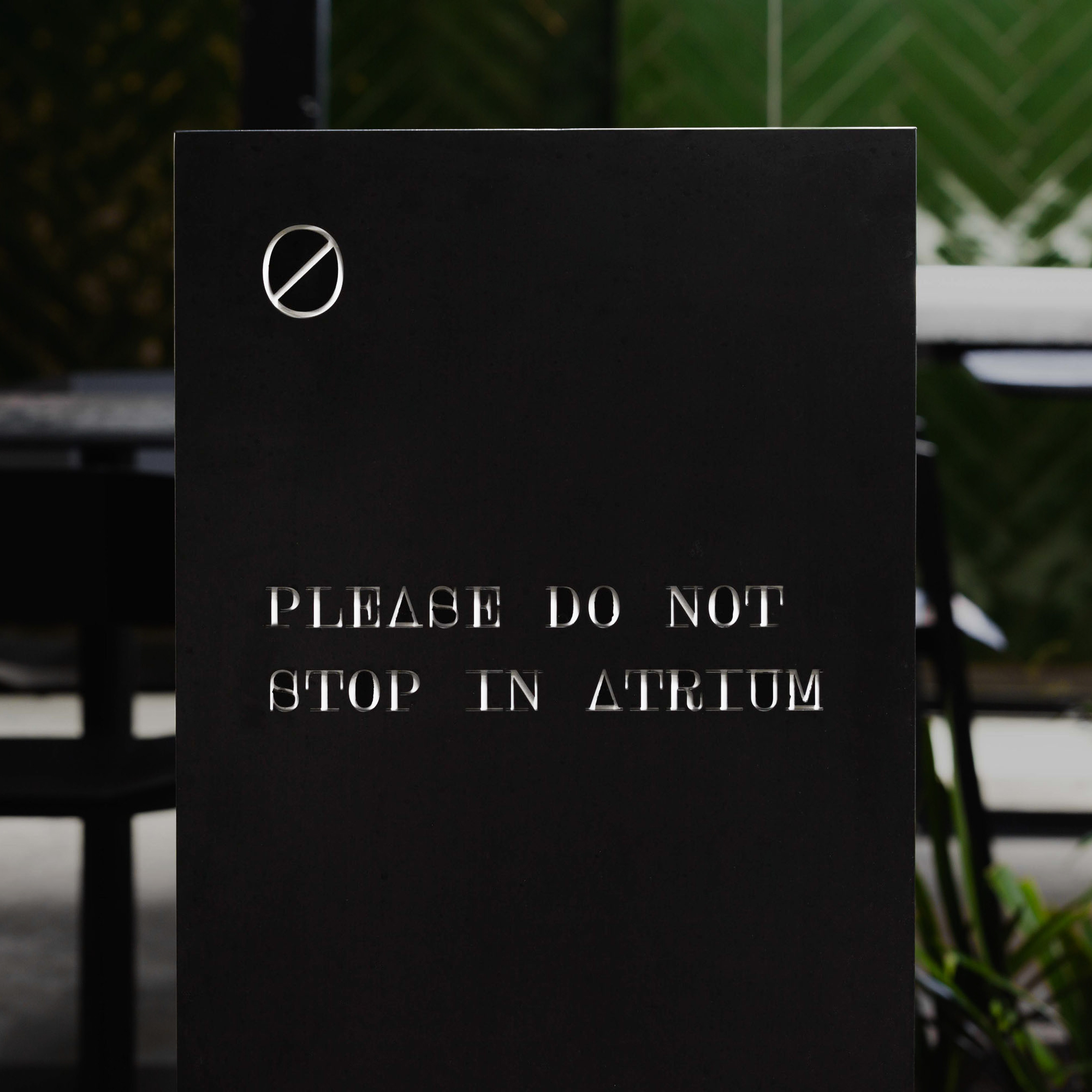
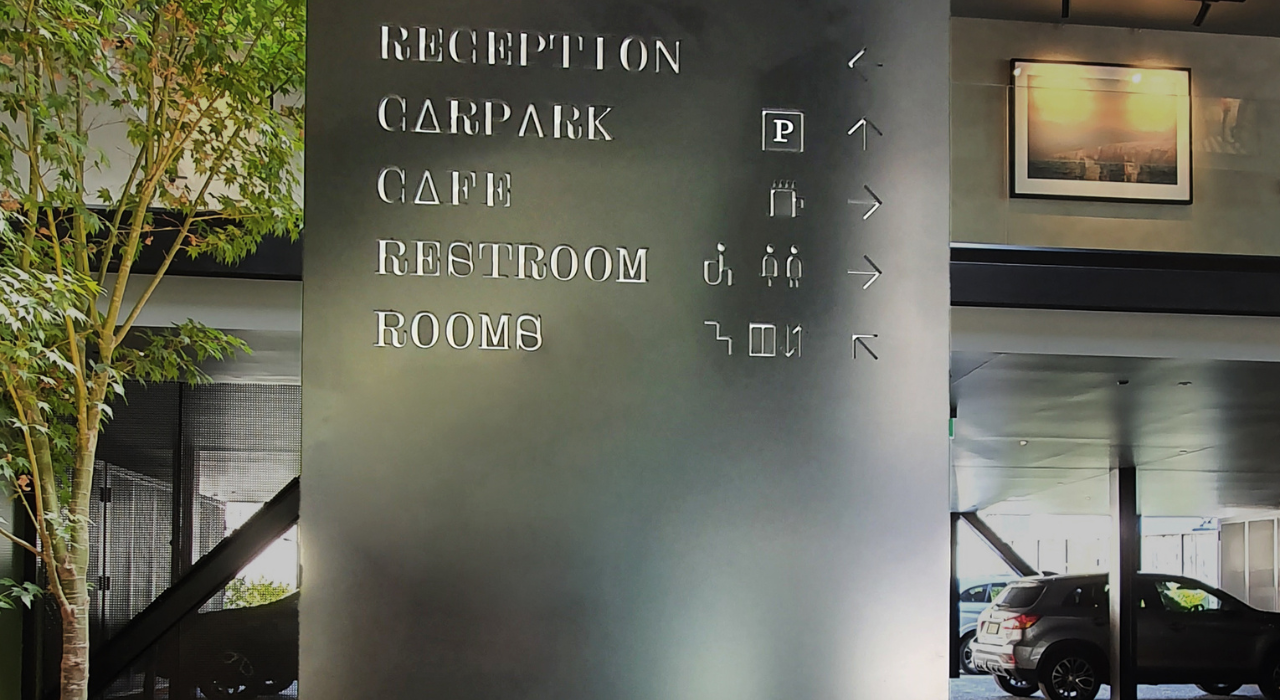
Decision Points at Ebb Dunedin
Our wayfinding map for the hotel included every possible guest decision point, including:
- Arrival and reception identification.
- Lift & level identification.
- Hallway identification and direction.
- Room number identification.
- Amenity (spa and dinning) identification and direction from various departure points within the hotel.
Reinforcing the reason for staying
Wayfinding at Ebb Dunedin goes consciously unnoticed by guests. This is exactly what it should do. The hotel goes to great pains to make sure everything is in its proper place. For example, the cutlery is presented precisely on dining tables and the only time guests would become aware of this is when something is amiss, such as the dessert fork sitting beside the plate as opposed to above it. The wayfinding is the same. It gently communicates and informs guests without them ever having to stop or seek assistance. In other words, it reinforces their reason for staying.
Ebb Dunedin has gone on to win multiple awards, including the 2022 Sir Miles Warren Award for Commercial Architecture and the Commercial Architecture Award at the 2022 New Zealand Architecture Awards.


End to end.

