
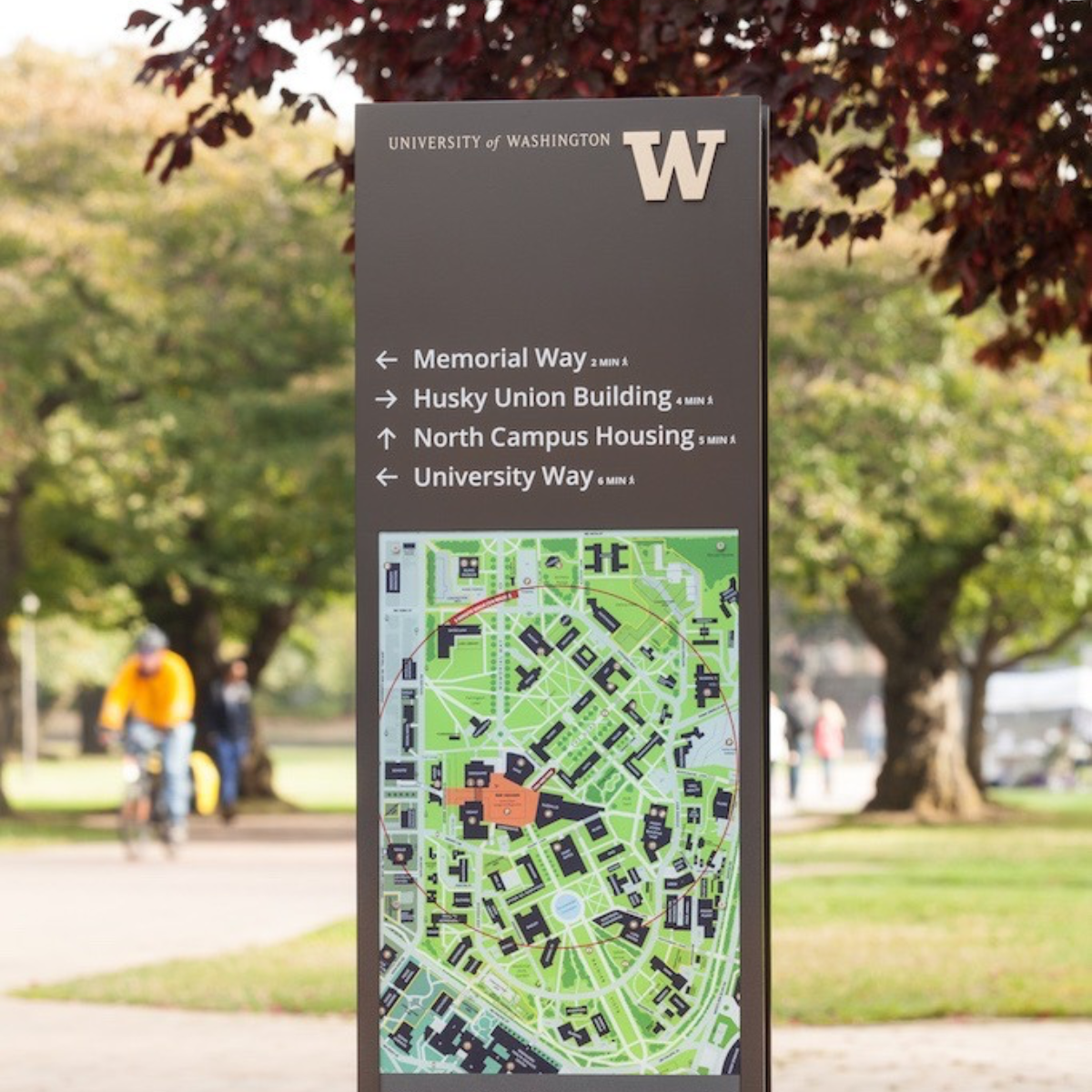


Amelia is running late for her first lecture. A first year Architecture student, she’s been busy admiring the old University building and now finds herself having to find her way to class, fast. She can feel the stress building as she tries to remember the name of the lecture theatre. Only she can’t see it on any signs. In fact, poor Amelia can’t understand the signs at all and she’s pretty certain they lead in circles, which means she’s just returned to the corridor she was originally standing in when the realisation set in that she was lost. Only now she’s also embarrassingly late.
The above is not entirely made-up. Indeed, names and places may have been altered to protect the lost and tardy, but the situation is very real. For example, the University of Essex surveyed 700 students after their first 6 weeks on campus and one of the key findings was how bad wayfinding was, with 41% of students struggling with navigating the campus, leading to comments such as: ”Finding my way around the campus is a nightmare.”
So yes, the nightmare is very much real. It’s also not to be dismissed lightly and a University is a good example of a reasonably stress-laden environment. Sure, it’s not as stressful as a hospital, or even an airport, but there is a time pressure that comes from attending lectures and seminars. Then there’s the sheer scale of unfamiliarity and the need for students to quickly learn the best route for their timetable, often having to navigate in and around ad-hoc campuses that have grown over time, with buildings and configurations that have changed over decades and with little relation to a single masterplan. Finally, there’s the very real social anxiety that makes it embarrassing to ask for help when everyone else seems to know where they’re going. All of this makes a University an ideal example for exploring the subject of stress and wayfinding. So let’s get into it…
The Links Between the Lost and the Anxious
Most of us humans don’t do well with uncertainty. The reason why is because it makes us anxious. Grupe & Nitschke (2013) argue that uncertainty about possible threats (i.e. getting lost) reduces how effectively we can prepare for it and that this contributes to anxiety. So in the case of Amelia, the fact she doesn’t know where her lecture hall is means she cannot plan to arrive on time, making her anxious about being both lost and late.
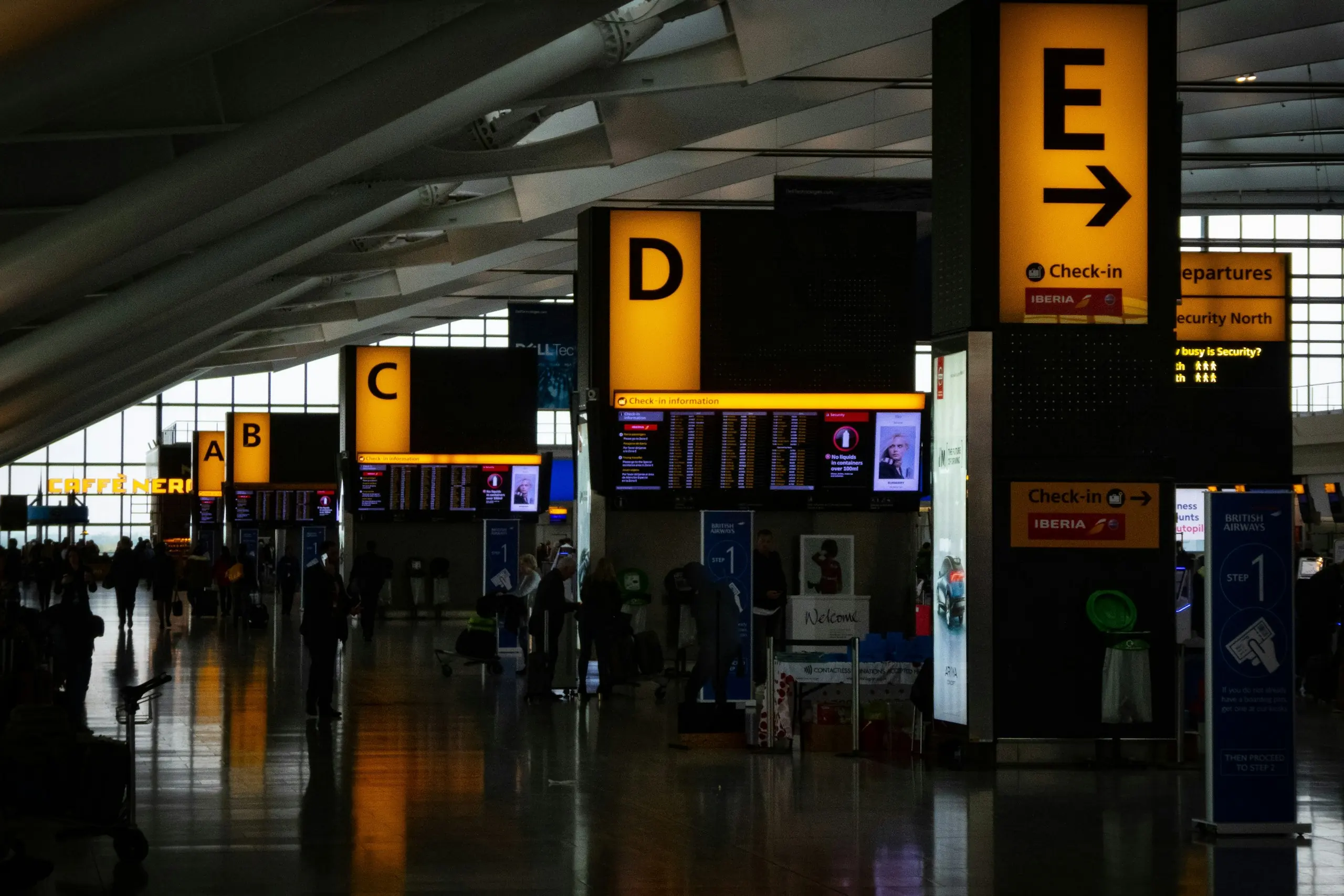
The time imperative in Amelia’s case makes it worse, too. Not knowing the degree of lateness (as measured in minutes) will raise her anxiety further. Even if the wayfinding clearly helps navigation, it may not alleviate that anxiety as she doesn’t know how long it will take to get there. This is why Airport signage often has the walking distance between terminals and to departure gates shown in minutes, to overcome precisely the issue Amelia will be experiencing at University.
Becoming lost can even trigger certain actions in individuals. For example, Amelia might feel the need to seek out excessive information by asking multiple people for the same directions, as if doubting every answer she was provided and needing the reassurance of a second and third opinion. Each time this happens, Amellia’s stress level will rise slightly as it means having to both admit she’s lost (again) and therefore embarrassed (again). You can see where we’re going with this (unlike poor Amelia) and it’s a compounding problem that could be even worse should Amelia suffer from spatial anxiety. This is a general apprehension and fear about navigating everyday environments and while there are no specific numbers to show how common it is, it’s certainly not uncommon.
What is definitely very common is stressing over being late, with 43% of respondents in a recent survey reporting feeling anxious over arriving late. In Amelia’s case, this is possibly magnified given the potential number of eyeballs on her as she opens the lecture hall doors, her feelings of social evaluation being triggered as she imagines being judged negatively by everyone who happened to glance in her direction. This is then made worse still by being flush from rushing. It’s a self-perpetuating stress inducer that builds on itself. And all because the University wayfinding was poor.
Stress Makes Navigation Worse
Poor Amelia hasn’t caught many breaks thus far and it’s only getting worse. In her rush to find the lecture hall she became more stressed and the simple (but very much not nice) state of being stressed actually made her navigation worse. When humans are stressed, we tend to shift from a flexible navigational thought process to a more rigid one. In other words, we stop relying on our map reading ability (or reading wayfinding signs) and fall back on past experiences. For example, we might guess there’ll be a toilet close to a hotel reception because that’s where we’ve learned they’ll always be. Only that doesn’t mean it will always be so and as Amelia begins to rely on instinct over instruction, navigating can get worse.
How Wayfinding Helps Students Settle In
There’s another aspect to Amelia’s experience we’ve not touched on yet - settling in. Many new University students will feel lost, both figuratively and literally. And you can map a chart between the two. For Amelia, arriving late and the social judgement that follows might play on her nerves about making friends and impact her mindset negatively. It might sound like a long leap from being lost to feeling lost - but it’s not. Minor incidents that may be trivial in the grand scheme of things (we imagine Amelia - like many students - will soon become comfortable with being late) can cause a significant impact on mental wellbeing. It’s not nice feeling judged and embarrassed, and hiding away from that judgement and embarrassment is natural. Which could mean not making friends as readily and settling in as quickly as others.
This is where wayfinding can help. To begin with, proper wayfinding at our fictitious University would make it abundantly clear to Amelia where she’s standing when looking at her schedule and seeing the upcoming lecture. This anchors Amelia to a specific place and to be a little philosophical about it, she really does need to know where she is to fully understand where she’s going.
Next, the wayfinding would communicate Amelia’s destination to her. Of course, it’s not possible to list every destination on all signs but even a general ‘Lecture Theatres This Way’ would provide reassurance and allow Amelia to begin her journey.
From there, every decision point should reinforce the route of travel and that takes wayfinding discipline. How many times have you tried to navigate a new venue and seen a sign for the meeting room only to find it absent from the next set of signs? This is because the wayfinding is poor and there wasn’t a disciplined process followed. And when wayfinding doesn't follow the rules then you know everyone will get lost. This is precisely how we map out every decision point and multiple journeys, making sure every beginning has a logical beginning and, pardon the pun, findable end.
All of the above sounds somewhat elementary, we know. Which is funny considering we’re talking about a University setting. Still, you’ll be surprised how common it is for sprawling university campuses to abandon their academic rigour when sussing out the wayfinding. It really does take quite a bit of analysis and planning (this is where we can help) and when it’s done right, students will enjoy an easier start to their academic journey. And that means poor Amelia will be less anxious, more settled and make friends to go to the local student bar with.
Strangely, no directions are needed for students to find that.




End to end.

