
.svg)
.svg)
.svg)
.svg)
.svg)
.svg)
.svg)
.svg)
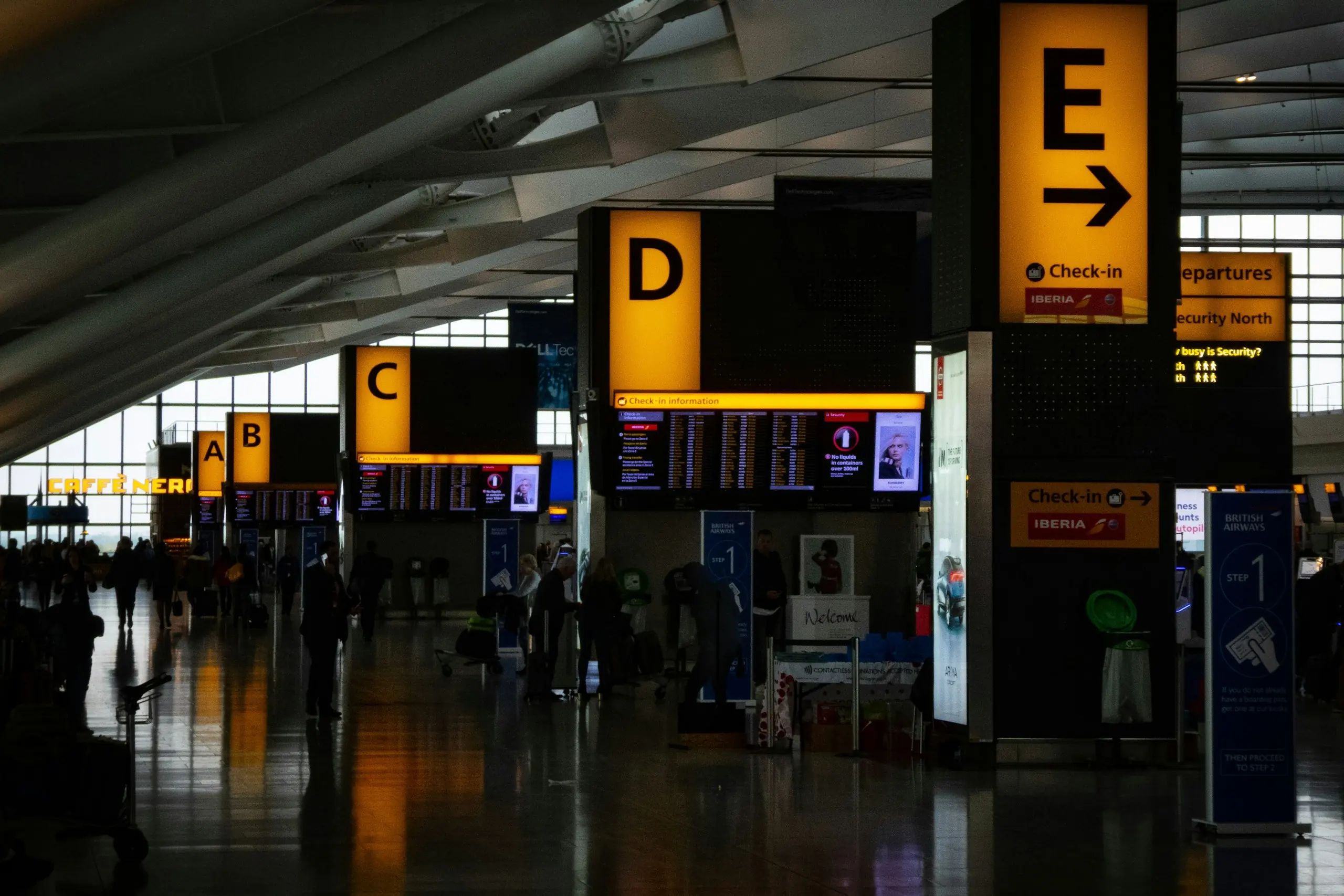
Most signage specifications read like a shopping list. A directory here, some directional signs there, room numbers on the doors, statutory signs where the code demands them. Each item is specified on its own, priced on its own, and installed on its own. And then, often, the building opens and people still get lost.
The problem isn't the signs. It's that a list of signs was never a wayfinding system in the first place.
Why the list approach fails
A person moving through an unfamiliar building isn't reading a schedule. They're asking a sequence of questions - Where am I? Where do I need to go? How do I get there? Am I there yet? - and they ask them in a particular order, at particular moments, as they move.
When signage is specified as a list, nobody has checked that those questions get answered in the right order at the right places. Gaps appear exactly where the list-maker wasn't thinking about the journey: the car park that doesn't tell you which entrance you want, the lobby that names departments but not directions, the corridor junction with no sign at all. Each individual sign might be perfectly specified. The system still fails, because there was no system - only parts.
A better way to think: zones
At Findable we specify wayfinding by zone rather than by product. A zone is a stage in the journey, and each zone answers a different question. We work with four.
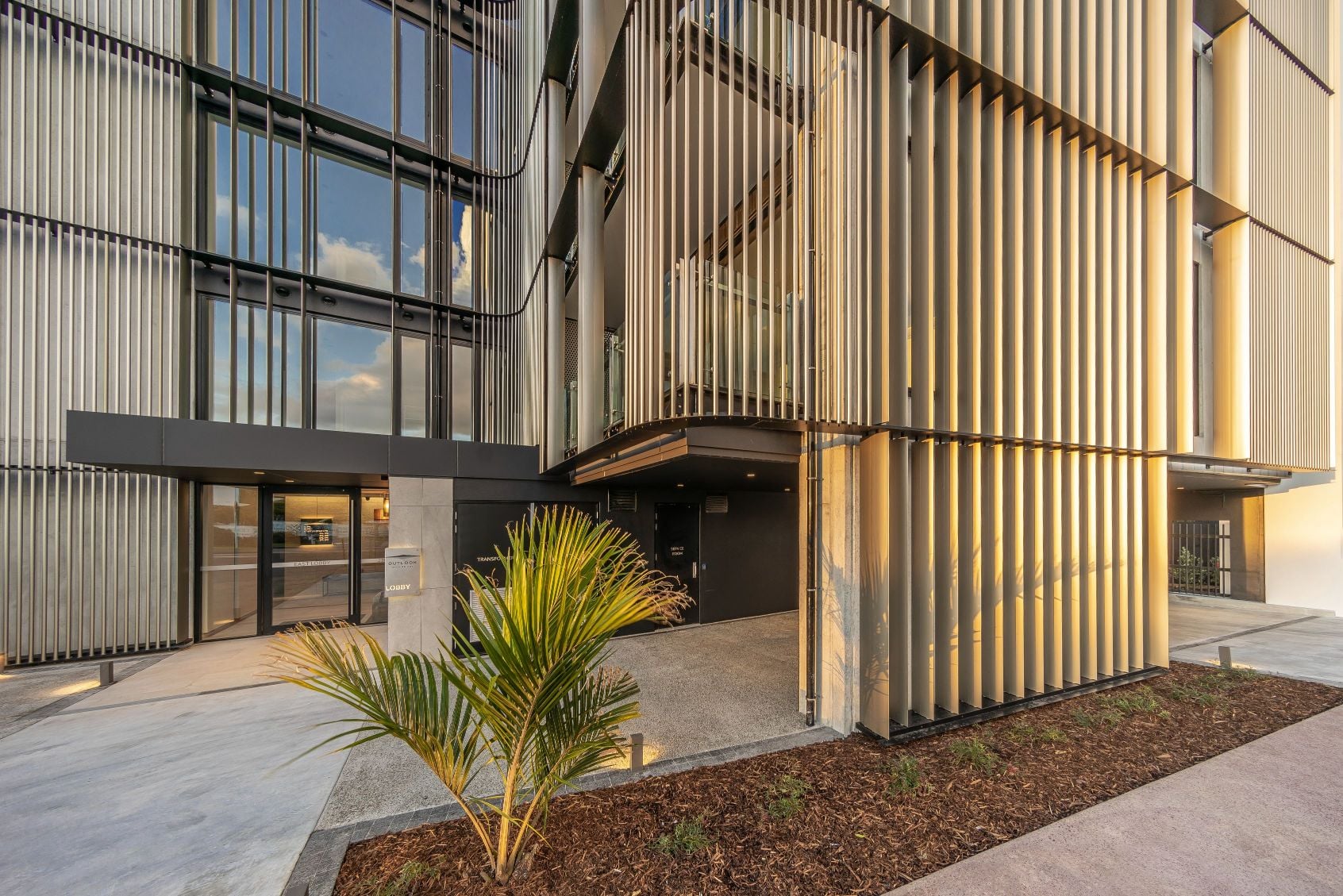
Zone 1 - Arrival and Approach. How the building announces itself before you're inside. Facade identity, entrance markers, the pylon at the site boundary, the first directional post in the car park. This zone answers Where am I, and is this the right place?
Zone 2 - Entry and Orientation. The moment you step inside and pause to get your bearings. Directories, you-are-here maps, the lobby's first decision. This zone answers What's in here, and where do I start? It's the highest-stakes moment in most public buildings - get it wrong and everything downstream compounds.
Zone 3 - Navigation and Circulation. The signs that carry you from decision point to decision point. Directional blades, suspended signs at junctions, level identification at stairs and lifts. This zone answers Which way now? - repeatedly, at every choice.
Zone 4 - Destination and Compliance. Confirmation you've arrived, plus the statutory signage the Building Code requires. Room and department identification, accessible facility signs, the regulatory layer. This zone answers Am I there, and is this compliant?
Why zones change the conversation
Thinking in zones does something a product list can't: it forces the design to follow the journey. When you specify zone by zone, gaps become obvious. A project with strong arrival signage and compliant room numbers but nothing in Zone 2 or 3 is visibly incomplete - there's a hole in the middle of the journey where people will get lost. On a product list, that same hole is invisible, because a list has no shape.
Zones also protect the design intent through to construction. When someone helpfully proposes dropping a set of directional signs to save cost, a product list makes that look like a line-item saving. A zone framework makes it look like what it actually is - a missing answer to a question every building user will ask. That reframing is often enough to keep the system intact.
And zones map cleanly onto the way people actually experience buildings, which means the wayfinding design can be discussed with a client or an architect in plain language, before a single product is chosen. The strategy comes first. The products follow from it.
The order matters
There's one more advantage worth naming. Designing by zone imposes an order of operations that a list never does: strategy, then schedule, then product. You decide what each stage of the journey needs to communicate, you locate the decision points, and only then do you choose the signs that answer them. Specifying products first - and reverse-engineering a journey to fit - is how most wayfinding goes wrong.
A sign schedule is an output. It's the last thing a good wayfinding process produces, not the first. If it's the first thing on the table, the building is already on its way to being one people get lost in.
Wayfinding done well is invisible. Nobody notices the system that quietly answered every question before they had to ask it. That only happens when it was designed as a system from the start.
Findable designs, makes and installs wayfinding for complex public buildings across New Zealand. If you have a project where people need to find their way, let's talk.



End to end.

