
.svg)
.svg)
.svg)
.svg)
.svg)
.svg)
.svg)
.svg)
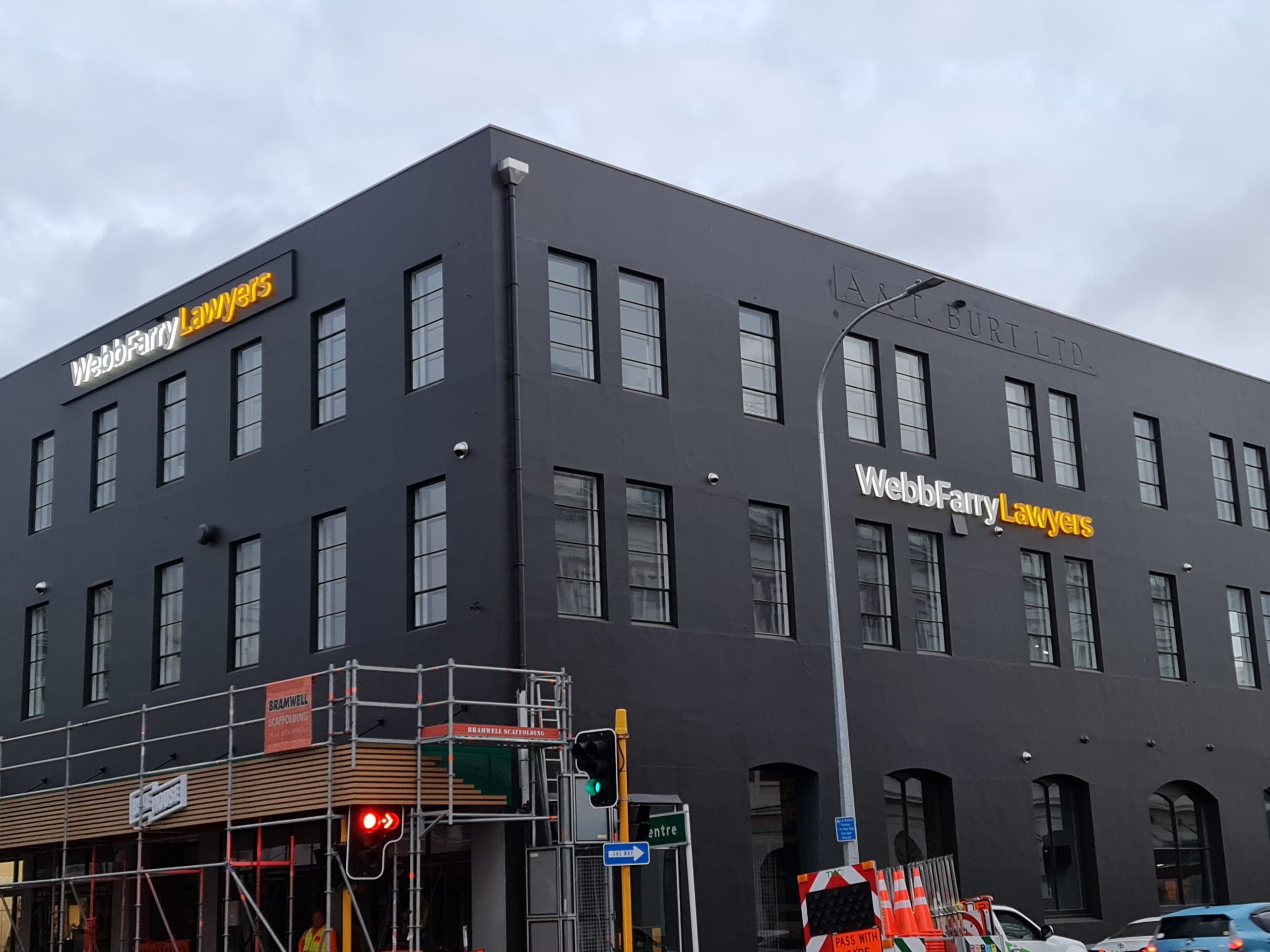
When people talk about signage they talk about typefaces, colours and materials. The part that actually decides how a sign performs is usually invisible: the way it is fixed to the building.
A mounting detail sets the shadow line, the stand-off, and whether a sign sits square in ten years or starts to lean in ten months. It also decides what happens to the wall behind it - what gets penetrated, what gets sealed, and what can be removed later without leaving scars.
The questions we ask before we fix anything
What is the substrate really made of, and what is behind it? Concrete, precast panel, cavity façade and heritage brick all take different fixings, and the wrong one either fails or does damage.
How will the sign carry its own weight over time? Adhesives creep, sealants shrink, and wind loads work fixings loose. A detail that looks tidy on day one has to still be tidy after a few hundred southerly fronts.
Can it come off cleanly? Tenancies change and brands refresh. A well-detailed sign can be replaced without re-cladding the wall behind it.
None of this shows up in a concept render, which is exactly why it matters. Ask to see the fixing details before you approve a signage package - they tell you more about the installer than the artwork does.



End to end.

