
.svg)
.svg)
.svg)
.svg)
.svg)
.svg)
.svg)
.svg)
A sign that works at midday can disappear at 6pm in a New Zealand winter. If a building trades, welcomes guests or receives deliveries after dark, its signage has a night shift - and that shift needs its own design decisions.
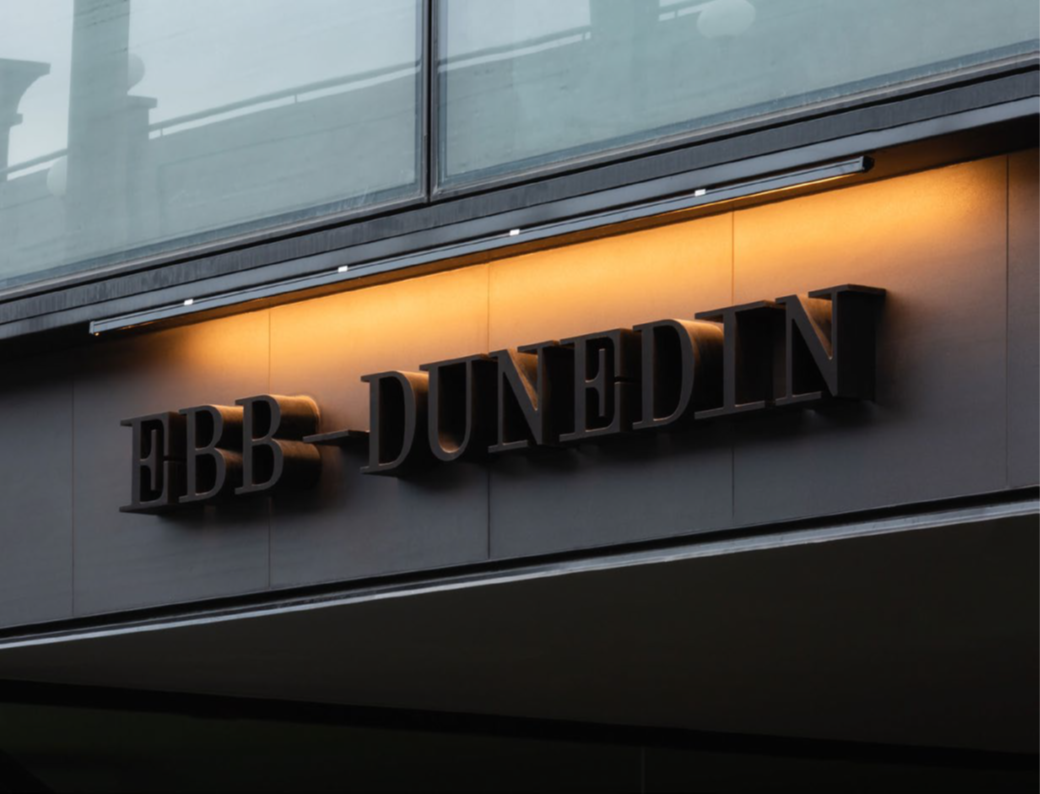
Illumination is not just brightness. Halo-lit letters read softly and sit well on heritage and hospitality buildings; face-lit letters carry further down a street; a well-placed external spot can do the job with no electrical work in the sign at all.
What changes after dark
Contrast flips. A dark letter on a light wall becomes a light halo on a dark wall, so the artwork has to be tested both ways before anything is fabricated.
Glare is the enemy of legibility. An over-driven LED module turns crisp letterforms into a bloom of light, which is why we specify output and check it on site rather than trusting the catalogue number.
Power and maintenance decide what is realistic. Every illuminated sign needs a feed, a switch or sensor, and a way to service the modules without dismantling the façade.
The best time to think about all of this is before the sign is made, not after the first dark evening. Walk the site at night during design - it is the cheapest lighting study you will ever do.



End to end.

